<style>
.w-richtext p,.w-richtext li,.w-richtext td{font-size:18px;line-height:1.65}
.w-richtext h2{font-size:26px;line-height:1.35}
.w-richtext h3{font-size:22px;line-height:1.35}
.w-richtext ul{list-style-type:disc;padding-left:24px;margin:12px 0}
.w-richtext ul li{margin-bottom:8px;line-height:1.65}
.w-richtext .ac-action-plan{background:linear-gradient(135deg,#fffcf4 0%,#fff8ed 100%);border-left:5px solid #9a6841;border-radius:12px;padding:28px 24px;margin:32px 0;box-shadow:0 2px 12px rgba(0,0,0,0.06)}
.article-header-section .article-container{max-width:1080px !important;margin:0 auto !important;padding:0 20px !important}
.article-header-section .article-hero-image{display:block;width:100%;max-width:660px;margin:0}
.article-header-section .article-title{display:block !important;font-family:Georgia,serif;font-size:32px;line-height:1.25;font-weight:700;color:#313743;margin:20px 0 12px 0;text-align:left;max-width:660px}
@media (max-width:767px){.article-header-section .article-title{font-size:26px}.article-header-section .article-hero-image{max-width:100%}}
.ac-article-cta{margin-top:40px;text-align:center}
.ac-article-cta .ac-cta-lead{font-family:Georgia,serif;font-size:17px;color:#555;margin:0 0 16px 0;line-height:1.5}
.ac-article-cta a.ac-nav-cta{display:inline-flex;align-items:center;gap:10px;padding:10px 14px 10px 20px;background:#313743;color:#fff;border:1.5px solid #14D4CD;border-radius:82px;font-family:Inter,sans-serif;font-size:14px;font-weight:600;letter-spacing:0.3px;text-decoration:none;transition:transform 0.15s ease,box-shadow 0.15s ease}
.ac-article-cta a.ac-nav-cta:hover{transform:translateY(-1px);box-shadow:0 6px 18px rgba(20,212,205,0.25)}
.ac-article-cta .ac-nav-cta-arrow{width:28px;height:28px;background:#14D4CD;border-radius:50%;display:inline-flex;align-items:center;justify-content:center;flex-shrink:0}
.ac-article-cta .ac-nav-cta-arrow svg{width:14px;height:14px}
</style>
<p class="publish-date" style="font-size:13px; color:#999; margin-bottom:16px;">Published: May 16, 2026 · Last updated: May 16, 2026</p>
<div class="ac-glance" style="background-color: #ffffff; padding: 20px; border: 2px solid #b0bec5; border-radius: 8px; margin: 20px 0;"><strong>This week's brief at a glance:</strong><ul style="margin: 12px 0; padding-left: 24px;"><li style="margin-bottom:6px;">Insomnia is the most common sleep problem in adults 60+, with about 30 to 50% reporting trouble falling asleep, staying asleep, or both at least 3 nights per week (NIA, 2024)</li><li style="margin-bottom:6px;">Most over-the-counter sleep aids contain diphenhydramine (Benadryl), which is on the Beers Criteria list of medications older adults should generally avoid because of fall and cognitive risks (NIA, 2024)</li><li style="margin-bottom:6px;">CBT-I (Cognitive Behavioral Therapy for Insomnia) is the first-line evidence-based treatment, with outcomes that match or exceed sleep medications and durable benefits at 12 months and beyond (Harvard Health, 2024)</li></ul></div>
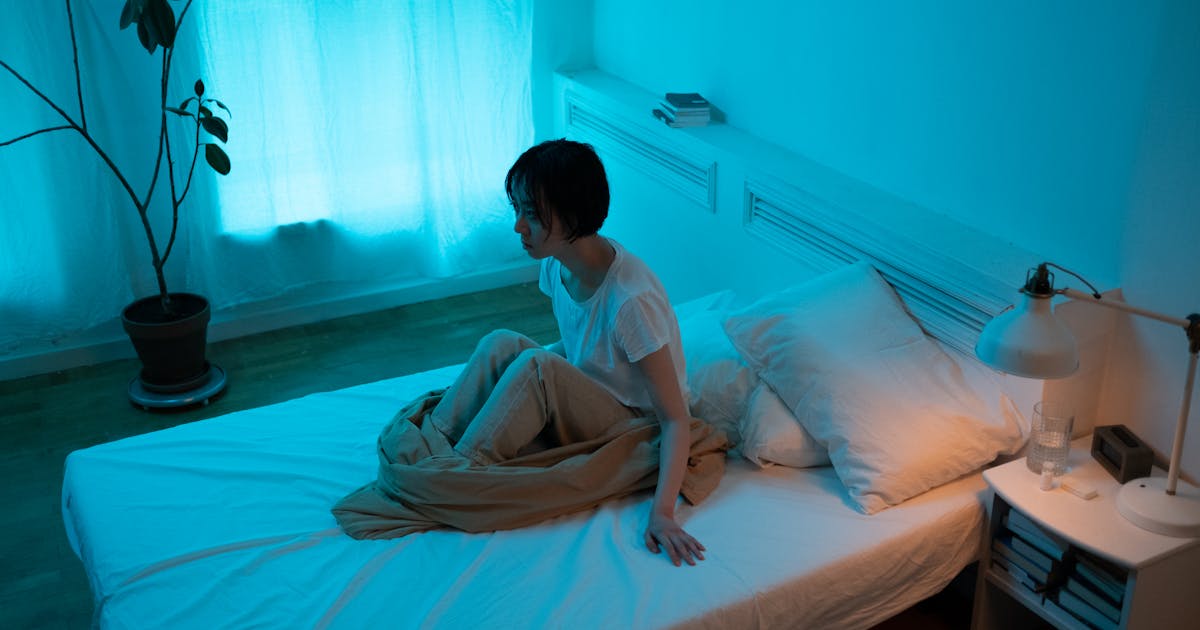
<p>The light is off. You are in bed. The mind that was working perfectly during the day is now wide awake at midnight, replaying conversations, building tomorrow's to-do list, and noticing every small sound in the house. By 2 in the morning you have done the math: even if you fall asleep right now you will only get 5 hours. The anxiety about not sleeping makes the not-sleeping worse. By 4 you give up and head to the kitchen.</p>
<p>This pattern is the textbook presentation of chronic insomnia, and after 60 it gets more common, more entrenched, and more often mishandled. The default response, an over-the-counter sleep aid like Tylenol PM or ZzzQuil, often backfires in older adults: it produces grogginess, increases fall risk, and contributes to long-term cognitive concerns. The treatment with the strongest evidence is rarely offered first.</p>
<h3>What Changes About Sleep After 60</h3>
<p>Several measurable shifts occur in sleep architecture with age. Total sleep time often shortens slightly (from around 8 hours to closer to 7). Deep slow-wave sleep, the most restorative phase, decreases. Sleep becomes more fragmented, with more frequent brief awakenings. The circadian rhythm tends to shift earlier, producing earlier bedtimes and earlier mornings. Melatonin production declines.</p>
<p>None of these changes alone causes insomnia. Insomnia is the addition of distress and impairment on top of the architectural changes. A 70-year-old who falls asleep at 9, wakes at 4, and feels rested during the day has shifted sleep patterns but does not have insomnia. A 70-year-old who lies awake until 2, wakes at 6, and feels exhausted has a treatable condition (<a href="https://www.nia.nih.gov/health/sleep/sleep-and-older-adults" target="_blank" rel="noopener">NIA, 2024</a>).</p>
<h3>Why OTC Sleep Aids Are A Bad Default For Older Adults</h3>
<p>Most over-the-counter sleep aids (Tylenol PM, Advil PM, ZzzQuil, Unisom, Benadryl) contain an antihistamine called diphenhydramine. The American Geriatrics Society's Beers Criteria specifically flags diphenhydramine as a potentially inappropriate medication for adults 65+, because of strong anticholinergic effects that increase the risk of confusion, dry mouth, urinary retention, blurred vision, and falls.</p>
<p>Long-term anticholinergic medication use is also associated with cognitive decline and dementia risk in observational studies. The Day 5 article on Benadryl and related anticholinergics covers the dementia connection in detail. For acute occasional use, the risk is small; for nightly chronic use over years, the risk-benefit calculus turns sharply negative for older adults.</p>
<h3>What CBT-I Is And Why It Works Better</h3>
<p>Cognitive Behavioral Therapy for Insomnia is a structured, time-limited (typically 6 to 8 sessions) protocol that addresses the thoughts, behaviors, and habits that maintain insomnia. The core components include sleep restriction (compressing time in bed to match actual sleep, then expanding as efficiency improves), stimulus control (using the bed only for sleep and sex, leaving the bedroom if not asleep within 20 minutes), cognitive restructuring (challenging catastrophic thoughts about sleep), and sleep hygiene optimization.</p>
<p>The evidence base is consistently strong. Multiple meta-analyses show CBT-I outperforms sleep medications at 3, 6, and 12 month follow-up, with no side effects and no dependency risk. The American Academy of Sleep Medicine and the American College of Physicians both recommend CBT-I as first-line treatment for chronic insomnia in adults, ahead of medication (<a href="https://www.health.harvard.edu/sleep/what-is-cbt-i" target="_blank" rel="noopener">Harvard Health, 2024</a>).</p>
<h3>How To Access CBT-I In 2026</h3>
<p>The traditional pathway is a referral to a sleep psychologist or behavioral sleep medicine specialist. Wait times can be long in some markets. The good news is that digital CBT-I programs (Sleepio, Somryst, SHUTi) have grown substantially in recent years and produce outcomes comparable to in-person therapy in published trials. Somryst is FDA-approved as a prescription digital therapeutic. Sleepio is widely available through some employer benefits programs.</p>
<p>For people without easy access to a CBT-I provider, self-guided workbooks (such as "Quiet Your Mind and Get to Sleep" by Carney and Manber) walk through the same protocol independently. Most users see meaningful improvement within 4 to 6 weeks of consistent application. The major barrier is adherence: the sleep restriction phase often makes things temporarily worse before improvement starts, which can drive early dropout.</p>
<h3>When Medication Is Still The Right Answer</h3>
<p>CBT-I is not the right tool for every patient or every situation. Short-term medication use (under 2 to 4 weeks) is appropriate for acute insomnia triggered by a specific stressor (grief, illness, jet lag). Patients with severe untreated psychiatric conditions, certain medical conditions, or who have already failed CBT-I may benefit from sleep-specific medications like the newer dual orexin receptor antagonists (suvorexant, lemborexant) that have better safety profiles than older sedatives.</p>
<p>The medications to actively avoid as first-line for older adults are benzodiazepines (Ativan, Xanax, Valium) and the Z-drugs (Ambien, Lunesta, Sonata), all of which carry significant fall and cognitive risk in older adults and are also on the Beers Criteria. If medication is needed, the conversation should be with a clinician who knows the geriatric sleep medication landscape, not a default prescription from a non-specialist (<a href="https://www.nia.nih.gov/health/medicines-and-medication-management/taking-medicines-safely-you-age" target="_blank" rel="noopener">NIA, 2024</a>).</p>
<!-- SECTION 4: YOUR ACTION PLAN -->
<div class="ac-action-plan" style="background: linear-gradient(135deg, #fffcf4 0%, #fff8ed 100%); border-left: 5px solid #9A6841; border-radius: 12px; padding: 28px 24px; margin: 32px 0; box-shadow: 0 2px 12px rgba(0,0,0,0.06);"><div style="display: flex; align-items: center; gap: 10px; margin-bottom: 20px;"><svg width="24" height="24" viewBox="0 0 24 24" fill="none" stroke="#9A6841" stroke-width="2" stroke-linecap="round" stroke-linejoin="round"><path d="M9 5H7a2 2 0 00-2 2v12a2 2 0 002 2h10a2 2 0 002-2V7a2 2 0 00-2-2h-2"/><rect x="9" y="3" width="6" height="4" rx="1"/><path d="M9 14l2 2 4-4"/></svg><span style="font-family: Georgia, serif; font-size: 22px; font-weight: 700; color: #313743;">Your Coach's Recommendations</span></div><div style="display: flex; gap: 14px; margin-bottom: 16px; align-items: flex-start;"><div style="min-width: 36px; width: 36px; height: 36px; background: #9A6841; border-radius: 50%; display: flex; align-items: center; justify-content: center; color: #fff; font-weight: 700; font-size: 16px; flex-shrink: 0;">1</div><div><div style="font-weight: 700; color: #313743; font-size: 15px; margin-bottom: 2px;">Stop Taking Nightly OTC Sleep Aids Containing Diphenhydramine.</div><div style="color: #6b7280; font-size: 13.5px; line-height: 1.5;">Check the active ingredient list on Tylenol PM, Advil PM, ZzzQuil, Unisom, and Benadryl. If diphenhydramine is listed and you have been taking it nightly, taper down with your physician. Long-term use carries cognitive and fall risks not worth the modest sleep benefit.</div></div></div><div style="display: flex; gap: 14px; margin-bottom: 16px; align-items: flex-start;"><div style="min-width: 36px; width: 36px; height: 36px; background: #9A6841; border-radius: 50%; display: flex; align-items: center; justify-content: center; color: #fff; font-weight: 700; font-size: 16px; flex-shrink: 0;">2</div><div><div style="font-weight: 700; color: #313743; font-size: 15px; margin-bottom: 2px;">Ask Your Doctor for a CBT-I Referral or Digital CBT-I Prescription.</div><div style="color: #6b7280; font-size: 13.5px; line-height: 1.5;">Sleep psychologists, behavioral sleep medicine specialists, or FDA-approved digital programs (Somryst, Sleepio) all work. Six to eight weeks of structured CBT-I outperforms medication at 12 months in head-to-head trials.</div></div></div><div style="display: flex; gap: 14px; margin-bottom: 20px; align-items: flex-start;"><div style="min-width: 36px; width: 36px; height: 36px; background: #9A6841; border-radius: 50%; display: flex; align-items: center; justify-content: center; color: #fff; font-weight: 700; font-size: 16px; flex-shrink: 0;">3</div><div><div style="font-weight: 700; color: #313743; font-size: 15px; margin-bottom: 2px;">Anchor a Consistent Wake Time, Even on Weekends.</div><div style="color: #6b7280; font-size: 13.5px; line-height: 1.5;">Wake time matters more than bedtime for circadian stability. Pick a window (say 6:30 to 7:00 AM) and hold it 7 days a week. Get bright light exposure within 15 minutes of waking. This single habit drives the strongest sleep improvements over 4 to 6 weeks.</div></div></div><div style="border-top: 1px solid #e5ddd4; margin: 16px 0;"></div><div style="display: flex; justify-content: center; align-items: center; gap: 10px; flex-wrap: wrap;"><button onclick="acPrintPlan()" style="background: none; border: 1px solid #d3cabe; border-radius: 8px; padding: 10px 16px; font-size: 13px; color: #6b7280; cursor: pointer; display: flex; align-items: center; gap: 6px;"><svg width="14" height="14" viewBox="0 0 24 24" fill="none" stroke="currentColor" stroke-width="2" stroke-linecap="round" stroke-linejoin="round"><polyline points="6 9 6 2 18 2 18 9"/><path d="M6 18H4a2 2 0 01-2-2v-5a2 2 0 012-2h16a2 2 0 012 2v5a2 2 0 01-2 2h-2"/><rect x="6" y="14" width="12" height="8"/></svg>Print</button></div></div>
<div style="margin-top: 32px; padding-top: 0;">
<div style="width: 60px; height: 2px; background: linear-gradient(90deg, #9A6841, #be7b4c); border-radius: 2px; margin-bottom: 20px;"></div>
<p style="font-family: Georgia, serif; font-size: 16px; font-style: italic; color: #777; margin: 0 0 6px 0; letter-spacing: 0.3px; padding-left: 38px;">To your health,</p>
<div style="display: flex; align-items: center; gap: 4px; margin-bottom: 4px;">
<img src="https://cdn.prod.website-files.com/69be130d412f9c2c202307ef/69c539b9526b266e2cba5521_ageless-coach-logo-black.png" alt="AC" style="width: 34px; height: 34px; object-fit: contain;">
<p style="font-family: Georgia, serif; font-size: 22px; font-weight: 700; color: #313743; margin: 0; letter-spacing: 0.5px;">Ageless Coach</p>
</div>
<p style="font-family: -apple-system, BlinkMacSystemFont, Segoe UI, sans-serif; font-size: 11px; font-weight: 600; color: #be7b4c; letter-spacing: 2px; text-transform: uppercase; margin: 0 0 0 28px;">Age Strong. Live Long.</p>
</div>
<div style="margin-top: 28px; padding-top: 20px; border-top: 1px solid #e5e7eb; text-align: center;">
<p style="font-family: -apple-system, BlinkMacSystemFont, Segoe UI, sans-serif; font-size: 13px; font-weight: 700; color: #6b7280; letter-spacing: 2px; text-transform: uppercase; margin: 0 0 16px 0;">Trusted Sources Behind This Article</p>
<div style="display: flex; justify-content: center; gap: 10px; flex-wrap: wrap;">
<a href="https://www.nia.nih.gov/health/sleep/sleep-and-older-adults" target="_blank" rel="noopener" style="display: inline-block; background: #fff; border: 1.5px solid #9A6841; color: #9A6841; padding: 8px 20px; border-radius: 20px; font-size: 14px; font-weight: 600; letter-spacing: 0.3px; text-decoration: none; transition: background 0.2s ease, color 0.2s ease;">NIH NIA</a>
<a href="https://www.nia.nih.gov/health/medicines-and-medication-management/taking-medicines-safely-you-age" target="_blank" rel="noopener" style="display: inline-block; background: #fff; border: 1.5px solid #9A6841; color: #9A6841; padding: 8px 20px; border-radius: 20px; font-size: 14px; font-weight: 600; letter-spacing: 0.3px; text-decoration: none; transition: background 0.2s ease, color 0.2s ease;">NIH NIA</a>
<a href="https://www.health.harvard.edu/sleep/what-is-cbt-i" target="_blank" rel="noopener" style="display: inline-block; background: #fff; border: 1.5px solid #9A6841; color: #9A6841; padding: 8px 20px; border-radius: 20px; font-size: 14px; font-weight: 600; letter-spacing: 0.3px; text-decoration: none; transition: background 0.2s ease, color 0.2s ease;">Harvard Health</a>
</div>
</div>
<p style="font-size: 12px; color: #999; margin-top: 40px; line-height: 1.5;"><em>This content is for educational purposes only and is not a substitute for professional medical advice, diagnosis, or treatment. Reading this article does not create a provider-patient relationship. Always consult your physician or qualified healthcare provider before making changes to your diet, exercise, or health routine. Ageless Coach is not liable for any actions taken based on this information.</em></p>
<div class="ac-faq" style="margin-top:40px; border-top:1px solid #e5e7eb; padding-top:32px;">
<h2 style="font-family:Georgia,serif; font-size:20px; font-weight:700; color:#313743; margin:0 0 20px 0;">Frequently Asked Questions</h2>
<details style="border:1px solid #e5e7eb; border-radius:8px; margin-bottom:10px; overflow:hidden;">
<summary style="padding:14px 18px; font-weight:600; font-size:15px; color:#313743; cursor:pointer; list-style:none; display:flex; justify-content:space-between; align-items:center;">
Is melatonin safe to take nightly after 60?
<svg width="16" height="16" viewBox="0 0 24 24" fill="none" stroke="#9A6841" stroke-width="2" stroke-linecap="round" stroke-linejoin="round" aria-hidden="true"><polyline points="6 9 12 15 18 9"/></svg>
</summary>
<div style="padding:0 18px 16px; font-size:18px; color:#555; line-height:1.65;">Melatonin has a much safer profile than antihistamine sleep aids. Low doses (0.5 to 3 mg) taken 1 to 2 hours before desired sleep onset are reasonable for short-term use and for shifting circadian phase. Long-term nightly use lacks strong evidence and is not well-studied. It works best when used strategically (jet lag, shift work, occasional onset insomnia) rather than as a chronic sleep aid.</div>
</details>
<details style="border:1px solid #e5e7eb; border-radius:8px; margin-bottom:10px; overflow:hidden;">
<summary style="padding:14px 18px; font-weight:600; font-size:15px; color:#313743; cursor:pointer; list-style:none; display:flex; justify-content:space-between; align-items:center;">
What about magnesium for sleep?
<svg width="16" height="16" viewBox="0 0 24 24" fill="none" stroke="#9A6841" stroke-width="2" stroke-linecap="round" stroke-linejoin="round" aria-hidden="true"><polyline points="6 9 12 15 18 9"/></svg>
</summary>
<div style="padding:0 18px 16px; font-size:18px; color:#555; line-height:1.65;">Magnesium glycinate or threonate, 200 to 400 mg in the evening, has modest evidence for improving sleep quality in older adults, particularly those with low dietary intake. It is well-tolerated, has cardiovascular and bone health benefits, and does not produce the cognitive risks of antihistamines. Reasonable to try for 4 to 6 weeks and evaluate. Avoid magnesium oxide (poorly absorbed and causes loose stools).</div>
</details>
<details style="border:1px solid #e5e7eb; border-radius:8px; margin-bottom:10px; overflow:hidden;">
<summary style="padding:14px 18px; font-weight:600; font-size:15px; color:#313743; cursor:pointer; list-style:none; display:flex; justify-content:space-between; align-items:center;">
How long does CBT-I take to work?
<svg width="16" height="16" viewBox="0 0 24 24" fill="none" stroke="#9A6841" stroke-width="2" stroke-linecap="round" stroke-linejoin="round" aria-hidden="true"><polyline points="6 9 12 15 18 9"/></svg>
</summary>
<div style="padding:0 18px 16px; font-size:18px; color:#555; line-height:1.65;">The first 2 weeks often feel worse, not better, because the sleep restriction phase intentionally compresses time in bed. Most people start seeing meaningful improvement by week 3 to 4, with peak benefit around week 6 to 8. The durability is the key advantage: benefits at 12 months exceed what sleep medications achieve even on the same schedule.</div>
</details>
<details style="border:1px solid #e5e7eb; border-radius:8px; margin-bottom:10px; overflow:hidden;">
<summary style="padding:14px 18px; font-weight:600; font-size:15px; color:#313743; cursor:pointer; list-style:none; display:flex; justify-content:space-between; align-items:center;">
Should I worry if I wake up at 4 AM and cannot fall back asleep?
<svg width="16" height="16" viewBox="0 0 24 24" fill="none" stroke="#9A6841" stroke-width="2" stroke-linecap="round" stroke-linejoin="round" aria-hidden="true"><polyline points="6 9 12 15 18 9"/></svg>
</summary>
<div style="padding:0 18px 16px; font-size:18px; color:#555; line-height:1.65;">Early morning awakening is one of the most common insomnia patterns after 60. It can be normal age-related circadian shift, sleep maintenance insomnia, or a symptom of underlying depression or anxiety (depression specifically often causes early waking). If it has persisted for more than 3 to 4 weeks and you feel exhausted during the day, talk to your physician about a sleep evaluation and a depression screen.</div>
</details>
<details style="border:1px solid #e5e7eb; border-radius:8px; margin-bottom:10px; overflow:hidden;">
<summary style="padding:14px 18px; font-weight:600; font-size:15px; color:#313743; cursor:pointer; list-style:none; display:flex; justify-content:space-between; align-items:center;">
What is sleep restriction therapy and why does it work?
<svg width="16" height="16" viewBox="0 0 24 24" fill="none" stroke="#9A6841" stroke-width="2" stroke-linecap="round" stroke-linejoin="round" aria-hidden="true"><polyline points="6 9 12 15 18 9"/></svg>
</summary>
<div style="padding:0 18px 16px; font-size:18px; color:#555; line-height:1.65;">Sleep restriction temporarily compresses time in bed to match actual sleep time (so if you average 5 hours of sleep across 8 hours in bed, you compress to 5.5 hours in bed). This builds sleep pressure, consolidates sleep, and breaks the bed-equals-frustration association. As sleep efficiency improves, time in bed is gradually extended. It is the most counterintuitive but most effective component of CBT-I.</div>
</details>
<details style="border:1px solid #e5e7eb; border-radius:8px; margin-bottom:10px; overflow:hidden;">
<summary style="padding:14px 18px; font-weight:600; font-size:15px; color:#313743; cursor:pointer; list-style:none; display:flex; justify-content:space-between; align-items:center;">
Are there safer prescription sleep medications for older adults?
<svg width="16" height="16" viewBox="0 0 24 24" fill="none" stroke="#9A6841" stroke-width="2" stroke-linecap="round" stroke-linejoin="round" aria-hidden="true"><polyline points="6 9 12 15 18 9"/></svg>
</summary>
<div style="padding:0 18px 16px; font-size:18px; color:#555; line-height:1.65;">The newer dual orexin receptor antagonists (suvorexant, lemborexant, daridorexant) have better safety profiles than older Z-drugs or benzodiazepines, with lower fall risk and less morning grogginess. They are not without risks (next-day sleepiness, dependency concerns are still emerging) but represent a meaningful improvement when medication is needed. Discuss with a clinician who knows the geriatric sleep medication landscape.</div>
</details>
</div>
<div class="ac-article-cta">
<p class="ac-cta-lead">Want one verified-science article like this every week?</p>
<a href="/newsletter" class="ac-nav-cta">
Get Better Health, Weekly
<span class="ac-nav-cta-arrow">
<svg viewBox="0 0 18 18" fill="none" xmlns="http://www.w3.org/2000/svg" aria-hidden="true"><path d="M4.24 13.59L12.73 5.11" stroke="#0D1B2A" stroke-width="1.8"/><path d="M4.95 4.4H13.44V12.89" stroke="#0D1B2A" stroke-width="1.8"/></svg>
</span>
</a>
</div>

Get Better Health, Weekly