<style>
:root{--dark-base:#0D1B2A;--dark-mid:#1B3A4B;--teal:#0EA5A0;--teal-dark:#0C8C88;--teal-bright:#14D4CD;--fog:#D8E8E8;--deep-fog:#C8DCDC;--fog-border:#A8C4C4;--ink:#313743;--ink-soft:#49505f;--muted:#6b7280;--warm:#9A6841;--warm-light:#be7b4c;--serif:"Source Serif 4",Georgia,serif;--sans:Inter,-apple-system,BlinkMacSystemFont,"Segoe UI",sans-serif}
.w-richtext p,.w-richtext li,.w-richtext td{font-size:20.5px;line-height:1.7;color:var(--ink-soft)}
.w-richtext ul{list-style-type:disc;padding-left:24px;margin:12px 0}
.w-richtext ul li{margin-bottom:8px}
.ac-answer{background:#fff;border:1px solid #D4E4E4;border-top:5px solid var(--teal);border-radius:16px;padding:22px 24px 18px;margin:16px 0 28px;box-shadow:0 6px 22px rgba(13,27,42,.07)}
.ac-answer .aa-eyebrow{font:800 12px/1 var(--sans);letter-spacing:2.5px;text-transform:uppercase;color:var(--teal-dark);margin-bottom:8px}
.ac-answer .aa-head{font-family:var(--serif);font-size:24px;line-height:1.2;font-weight:800;color:var(--dark-base);margin:0 0 16px}
.ac-answer .aa-list{list-style:none;margin:0;padding:0}
.ac-answer .aa-list li{display:flex;gap:12px;align-items:baseline;padding:11px 0;border-bottom:1px solid #EDF3F3;font:700 16.5px/1.4 var(--sans);color:var(--ink)}
.ac-answer .aa-list li:last-child{border-bottom:none}
.ac-answer .aa-n{flex-shrink:0;width:24px;height:24px;border-radius:50%;background:var(--teal-dark);color:#fff;font:800 12px/24px var(--sans);text-align:center}
.ac-answer .aa-food{color:var(--teal-dark);font-weight:800}
.ac-answer .aa-cue{margin-top:18px;text-align:center}
.ac-answer .aa-cta{display:inline-flex;align-items:center;gap:10px;background:var(--teal-dark);color:#fff;font:800 14px/1 var(--sans);letter-spacing:.2px;padding:14px 26px;border-radius:50px;text-decoration:none;box-shadow:0 6px 16px rgba(12,140,136,.30)}
.ac-answer .aa-cta:hover{background:#0A7A76}
.ac-answer .aa-arw{display:inline-block;animation:aa-nudge 1.4s ease-in-out infinite}
@keyframes aa-nudge{0%,100%{transform:translateY(0)}50%{transform:translateY(4px)}}
@media(max-width:560px){.ac-answer{padding:20px 18px 16px}.ac-answer .aa-head{font-size:21px}.ac-answer .aa-list li{font-size:15px}}
.ac-band{margin:56px 0 24px;padding:26px 24px 12px;background:linear-gradient(180deg,#F0F7F7,#fff);border-radius:16px}
.ac-band.hype{background:linear-gradient(180deg,#FAF3EB,#fff)}
.ac-band .inner{display:flex;gap:20px;align-items:center}
.ac-band .big{font:900 72px/1 var(--sans);color:var(--deep-fog);flex-shrink:0}
.ac-band.hype .big{color:#EAD9C6}
.ac-band .q{font:700 13px/1.4 var(--sans);letter-spacing:2px;text-transform:uppercase;color:var(--teal-dark)}
.ac-band.hype .q{color:var(--warm)}
.ac-band h3{font-family:var(--serif);font-size:30px;line-height:1.2;font-weight:800;color:var(--ink);margin:0}
.ac-callout{border-left:4px solid var(--teal);background:#F4FAFA;border-radius:0 12px 12px 0;padding:18px 22px;margin:28px 0}
.ac-callout .n{font:800 20px/1.35 var(--sans);color:var(--dark-mid);margin-bottom:6px}
.ac-callout .d{font:500 15px/1.55 var(--sans);color:var(--ink-soft)}
.ac-callout .c{font:600 11.5px/1 var(--sans);letter-spacing:1.5px;text-transform:uppercase;color:var(--muted);margin-top:10px}
.ac-plan{background:linear-gradient(135deg,#F4FAFA 0%,#fff 100%);border-left:5px solid var(--teal-dark);border-radius:14px;padding:30px 26px;margin:40px 0 0;box-shadow:0 2px 12px rgba(0,0,0,.06);scroll-margin-top:100px}
.ac-plan .ptitle{font-family:var(--serif);font-size:24px;font-weight:800;color:var(--ink);margin-bottom:22px}
.ac-plan .step{display:flex;gap:16px;margin-bottom:18px;align-items:flex-start}
.ac-plan .step .n{min-width:38px;width:38px;height:38px;background:var(--teal-dark);border-radius:50%;color:#fff;font:800 17px/38px var(--sans);text-align:center;flex-shrink:0}
.ac-plan .sh{font:800 16.5px/1.4 var(--sans);color:var(--ink);margin-bottom:3px}
.ac-plan .sd{font:400 15px/1.6 var(--sans);color:var(--muted)}
.ac-plan .actions{border-top:1px solid #D8E8E8;margin-top:16px;padding-top:20px}
.ac-primary-row{display:flex;align-items:center;gap:10px;padding:0 4px}
.ac-btn-primary-wide{flex:1;background:var(--teal);color:#fff;border:1.5px solid var(--teal);border-radius:14px;padding:12px 22px;box-shadow:0 4px 14px rgba(14,165,160,.22);font-family:var(--sans);cursor:pointer;display:grid;grid-template-columns:auto 1fr;gap:14px;align-items:center;transition:all .18s ease}
.ac-btn-primary-wide:hover{background:var(--teal-dark);border-color:var(--teal-dark)}
.ac-btn-primary-wide .icon svg{width:22px;height:22px;color:#fff;display:block}
.ac-btn-primary-wide .label{text-align:left;line-height:1.25}
.ac-btn-primary-wide .label .top{display:block;font-weight:700;font-size:15.5px;color:#fff}
.ac-btn-primary-wide .label .top em{font-style:italic;font-weight:700}
.ac-cal-help{position:relative;flex-shrink:0}
.ac-cal-help summary{list-style:none;width:24px;height:24px;border-radius:50%;background:#E4F1F1;border:1px solid var(--fog-border);color:var(--dark-mid);font:700 13px/22px var(--sans);text-align:center;cursor:pointer;display:block}
.ac-cal-help summary::-webkit-details-marker{display:none}
.ac-cal-help .tip{position:absolute;right:0;top:32px;z-index:50;width:290px;background:var(--dark-base);color:var(--fog);border-radius:12px;padding:14px 16px;font:500 12.5px/1.55 var(--sans);box-shadow:0 10px 30px rgba(13,27,42,.35)}
.ac-cal-help .tip strong{color:#fff}
.ac-btn-share-wide{display:flex;width:100%;align-items:center;justify-content:center;gap:10px;background:#fff;color:var(--teal-dark);border:1.5px solid var(--teal-dark);border-radius:14px;padding:12px 22px;margin-top:10px;font:800 15px/1 var(--sans);cursor:pointer}
.ac-btn-share-wide svg{width:18px;height:18px}
.ac-midcap{background:linear-gradient(180deg,#F0F7F7,#fff);border:1.5px solid var(--fog-border);border-radius:16px;padding:24px 22px;margin:34px 0;text-align:center}
.ac-midcap h4{font-family:var(--serif);font-size:22px;font-weight:800;color:var(--ink);margin:0 0 6px}
.ac-midcap .sub{font:500 14px/1.55 var(--sans);color:var(--ink-soft);margin:0 auto 14px;max-width:400px}
.ac-midcap .mcform{display:flex;gap:8px;max-width:400px;margin:0 auto}
.ac-midcap .mcform input{flex:1;border:1.5px solid var(--fog-border);border-radius:50px;padding:12px 18px;font:500 14px/1 var(--sans);min-width:0}
.ac-midcap .mcform button{background:var(--teal-dark);color:#fff;border:none;border-radius:50px;padding:12px 20px;font:800 13.5px/1 var(--sans);cursor:pointer;white-space:nowrap}
.ac-midcap .fine{font:500 11.5px/1.5 var(--sans);color:var(--muted);margin-top:10px}
@media (max-width:520px){.ac-midcap .mcform{flex-direction:column}}
.ac-assess-promo{background:linear-gradient(135deg,#D8E8E8,#C8DCDC);border:1px solid var(--fog-border);border-radius:16px;padding:34px 30px;margin:44px 0;text-align:center}
.ac-assess-promo .eyebrow{color:var(--teal-dark);font:800 12px/1 var(--sans);letter-spacing:2.5px;text-transform:uppercase;margin:0 0 10px}
.ac-assess-promo h4{font-family:var(--serif);color:var(--dark-base);font-size:26px;font-weight:800;margin:0 0 12px}
.w-embed .ac-assess-promo p.ap-body,.ac-assess-promo p.ap-body{font-family:Georgia,serif;color:#3A5555;font-size:15.5px;font-weight:500;line-height:1.65;max-width:540px;margin:0 auto 22px}
.ac-assess-promo .ap-cta{display:inline-block;background:var(--teal-bright);color:var(--dark-base);font:800 15px/1 var(--sans);padding:15px 30px;border-radius:50px;text-decoration:none}
.ac-assess-promo .ap-fine{color:#4E6B6B;font:500 13px/1.5 var(--sans);margin:14px 0 0}
.ac-assess-line{border-top:1px solid #E2ECEC;margin-top:30px;padding:22px 10px 0;text-align:center;font:500 15.5px/1.6 var(--sans);color:#3A5555}
.w-embed .ac-assess-line a,.ac-assess-line a{color:var(--teal-dark);font-weight:700;text-decoration:underline;text-underline-offset:3px}
.ac-articlemeta{font:500 12.5px/1.6 var(--sans);color:#98a0a6;text-align:center;margin:24px 0 0}
.ac-capture{background:linear-gradient(180deg,#F0F7F7,#fff);border:1.5px solid var(--fog-border);border-radius:16px;padding:30px 28px;margin:26px 0 44px;text-align:center}
.ac-capture .cap-state{display:none}
.ac-capture[data-state="trigger"] .st-trigger{display:block}
.ac-capture[data-state="form"] .st-form{display:block}
.ac-capture[data-state="sent"] .st-sent{display:block}
.ac-capture h4{font-family:var(--serif);font-size:24px;font-weight:800;color:var(--ink);margin:0 0 8px}
.ac-capture .sub{font:500 15px/1.55 var(--sans);color:var(--ink-soft);margin:0 auto 18px;max-width:430px}
.ac-capture .bigbtn{display:inline-flex;align-items:center;gap:10px;background:var(--teal-dark);color:#fff;border:none;border-radius:50px;padding:16px 30px;font:800 16px/1 var(--sans);cursor:pointer;box-shadow:0 6px 18px rgba(12,140,136,.28)}
.ac-capture .capform{display:flex;gap:10px;max-width:430px;margin:0 auto}
.ac-capture .capform input{flex:1;border:1.5px solid var(--fog-border);border-radius:50px;padding:14px 20px;font:500 15px/1 var(--sans)}
.ac-capture .capform button{background:var(--teal-dark);color:#fff;border:none;border-radius:50px;padding:14px 24px;font:800 14px/1 var(--sans);cursor:pointer}
.ac-capture .sent-check{width:52px;height:52px;border-radius:50%;background:var(--teal);color:#fff;font:800 26px/52px var(--sans);margin:0 auto 12px}
.ac-capture .dl{display:inline-block;margin-top:6px;color:var(--teal-dark);font:700 15px/1 var(--sans);text-decoration:underline;cursor:pointer}
.ac-capture .fine{font:500 12px/1.5 var(--sans);color:var(--muted);margin-top:12px}
.ac-sig{margin-top:36px}
.ac-sig .rule{width:60px;height:2px;background:linear-gradient(90deg,var(--teal-dark),var(--teal-bright));margin-bottom:18px;border-radius:2px}
.ac-sig .toyour{font-family:var(--serif);font-size:16px;font-style:italic;color:#777;margin:0 0 10px;padding-left:2px}
.ac-faq{margin-top:40px;border-top:1px solid #e5e7eb;padding-top:30px;margin-bottom:40px}
.ac-faq h2{font-family:var(--serif);font-size:23px;font-weight:800;color:var(--ink);margin:0 0 18px}
.ac-faq details{border:1px solid #e5e7eb;border-radius:10px;margin-bottom:10px}
.ac-faq summary{padding:15px 18px;font:700 16px/1.4 var(--sans);color:var(--ink);cursor:pointer;display:flex;justify-content:space-between;align-items:center;list-style:none}
.ac-faq summary:after{content:"\25BE";color:var(--warm)}
.ac-faq .a{padding:0 18px 16px;font-size:17px;line-height:1.65;color:#555}
.article-header-section .article-container{max-width:1080px !important;margin:0 auto !important;padding:0 20px !important}
.article-header-section .article-hero-image{display:block;width:100%;max-width:660px;margin:0}
.article-header-section .article-title{display:block !important;font-family:var(--serif);font-size:32px;line-height:1.25;font-weight:700;color:#313743;margin:20px 0 12px 0;text-align:left;max-width:660px}
@media (max-width:767px){.article-header-section .article-title{font-size:26px}.article-header-section .article-hero-image{max-width:100%}}
@media (max-width:640px){.ac-band .big{font-size:52px}}
@media (max-width:520px){.ac-capture .capform{flex-direction:column}}
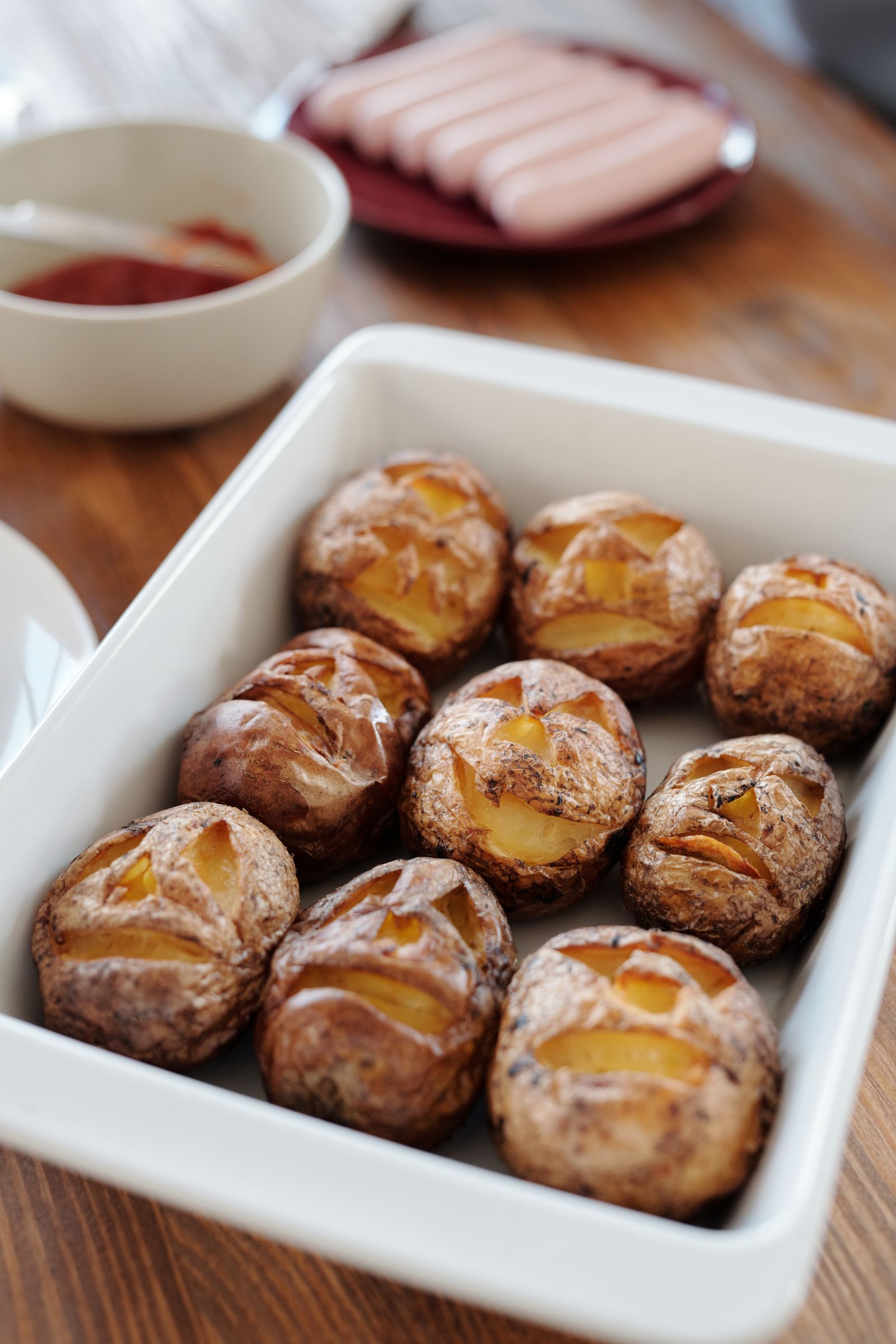
.ac-figure{margin:30px 0}.ac-figure img{display:block;width:100%;border-radius:14px;height:auto;aspect-ratio:800/300}.ac-figure figcaption{font:500 13px/1.5 var(--sans);color:var(--muted);margin-top:9px}</style><div class="ac-answer"><div class="aa-eyebrow">What the evidence actually says</div><h2 class="aa-head">A banana is a decent snack and a middling potassium source. A potato baked in its skin carries more than twice as much, and most Americans are short of the daily target whichever one they reach for.</h2><ol class="aa-list"><li><span class="aa-n">1</span><span><span class="aa-food">952 mg</span> · a medium russet potato baked in its skin, per Harvard Health</span></li><li><span class="aa-n">2</span><span><span class="aa-food">422 mg</span> · a medium banana, less than half the potato</span></li><li><span class="aa-n">3</span><span><span class="aa-food">3,400 and 2,600 mg</span> · the daily targets for adult men and adult women</span></li><li><span class="aa-n">4</span><span><span class="aa-food">Skin on</span> · a fair amount of the mineral sits in or just beneath it</span></li><li><span class="aa-n">5</span><span><span class="aa-food">Sodium counts</span> · the ratio matters as much as the potassium itself</span></li></ol><div class="aa-cue"><a class="aa-cta" href="#coach-recommendations">Get Your Coach's 3-Step Plan <span class="aa-arw">↓</span></a></div></div><p>Ask anyone where to find potassium and you will hear the same answer. The banana has held that job in the public imagination for decades, largely on the strength of being yellow, portable and heavily marketed. It is not a bad food. It is simply not the strongest thing in the produce aisle, and it is not particularly close.</p><p><a href="https://www.health.harvard.edu/diet-and-nutrition/the-best-foods-high-in-potassium-and-why-you-need-them" target="_blank" rel="noopener">Harvard Health</a> opens its own guide with the correction: bananas are just the beginning, and almost every food in the plant kingdom, from potatoes to papayas, supplies some amount of potassium. The interesting question is not whether bananas count. It is why nutrition experts have flagged this mineral as a nutrient of public health concern in the first place.</p><div class="ac-band"><div class="inner"><div class="big">1</div><div><div class="q">The comparison</div><h3>The Potato Wins, and Not Narrowly</h3></div></div></div><p>The numbers settle it quickly. In the food table <a href="https://www.health.harvard.edu/diet-and-nutrition/the-best-foods-high-in-potassium-and-why-you-need-them" target="_blank" rel="noopener">Harvard Health</a> publishes from USDA FoodData Central, a medium russet potato baked with the skin on carries about 952 mg of potassium. A medium banana carries 422 mg. That is a gap of more than two to one in a single serving, and the potato is not even an exotic ingredient.</p><p>The rest of the table rearranges the whole mental picture. Half a cup of cooked beet greens comes in at about 655 mg. A baked sweet potato with skin, about 542 mg. Three ounces of cooked wild Atlantic salmon, about 534 mg. A cup of plain low fat yogurt, about 531 mg. Half a cup of cooked white beans, about 500 mg. Every one of those beats the banana, and most people would not have guessed a single one of them.</p><p>Harvard Health's specific instruction about potatoes is worth repeating because it is easy to lose: a fair amount of the mineral, along with some fiber, sits in or just beneath the skin. Peeling the potato throws away part of the reason you cooked it.</p><div class="ac-band hype"><div class="inner"><div class="big">2</div><div><div class="q">The gap</div><h3>Why Almost Everyone Falls Short</h3></div></div></div><p>The target is not obscure. The <a href="https://ods.od.nih.gov/factsheets/Potassium-Consumer/" target="_blank" rel="noopener">NIH Office of Dietary Supplements</a> puts the daily adequate intake at 3,400 mg for adult men and 2,600 mg for adult women, and states plainly that the diets of many people in the United States provide less than recommended amounts. Even when food and supplements are combined, total intakes for most people sit below the recommendation.</p><p>Harvard Health's Teresa Fung, adjunct professor of nutrition at Harvard's T.H. Chan School of Public Health, names the cause without hedging. People are not eating enough fruits and vegetables, and especially legumes. Compounding it, she says, the modern American diet leans heavily on ultra processed foods, which are typically low in potassium and high in sodium, the exact opposite of what the body needs.</p><figure class="ac-figure"><img src="https://images.pexels.com/photos/8755969/pexels-photo-8755969.jpeg?auto=compress&cs=tinysrgb&w=800&h=300&fit=crop" alt="Baked potatoes split open in their skins on brown paper" width="800" height="300" loading="lazy" decoding="async"><figcaption>Harvard Health puts a medium russet baked in its skin at about 952 mg of potassium. A fair amount sits in or just beneath the skin.</figcaption></figure><div class="ac-band"><div class="inner"><div class="big">3</div><div><div class="q">The mechanism</div><h3>What Potassium Does to Blood Pressure</h3></div></div></div><p><a href="https://www.health.harvard.edu/diet-and-nutrition/the-best-foods-high-in-potassium-and-why-you-need-them" target="_blank" rel="noopener">Harvard Health</a> describes the mechanism in two moves. Potassium helps relax blood vessel walls, and it signals the kidneys to excrete excess sodium. Both lower blood pressure, which is what connects the mineral to a reduced risk of stroke and cardiovascular disease. It also works alongside sodium to generate the electrical signals that let muscles, including the heart, contract and relax.</p><p><a href="https://www.cdc.gov/salt/sodium-potassium-health/index.html" target="_blank" rel="noopener">CDC</a> states the practical version: increasing potassium intake can help decrease your blood pressure if you have high blood pressure, and by lowering blood pressure it can also reduce your risk for heart disease and stroke. CDC is careful to present sodium and potassium as a pair rather than a single lever, because most Americans eat too much of one and too little of the other.</p><p>The <a href="https://ods.od.nih.gov/factsheets/Potassium-Consumer/" target="_blank" rel="noopener">NIH Office of Dietary Supplements</a> adds the consequences of running low over time: too little potassium can increase blood pressure, deplete calcium in bones, and increase the risk of kidney stones. People with low intakes have an increased risk of developing high blood pressure, especially if their diet is high in salt.</p><div class="ac-band"><div class="inner"><div class="big">4</div><div><div class="q">The better sources</div><h3>Where the Real Potassium Lives</h3></div></div></div><p>Fung's single most effective strategy, as reported by <a href="https://www.health.harvard.edu/diet-and-nutrition/the-best-foods-high-in-potassium-and-why-you-need-them" target="_blank" rel="noopener">Harvard Health</a>, is to eat more whole, minimally processed foods, particularly fruits, vegetables and legumes. Her specific advice is unusually concrete. Get in the legume habit, because beans, peas and lentils are high potassium and also supply protein and filling fiber, and a half cup serving is not hard to do. Canned beans make it easier.</p><p>Enjoy potatoes and sweet potatoes simply cooked and skin on, which she immediately qualifies: we are not talking about French fries or potato chips. Eat more dark leafy greens, because beet greens, Swiss chard and spinach all rank among the top sources per serving. Increase dairy and fish, many of which are potassium rich. And where fruit juice or dried fruit is concerned, go easy, because juice is high in sugar even when it is natural and drying concentrates sugars and calories.</p><p><a href="https://ods.od.nih.gov/factsheets/Potassium-Consumer/" target="_blank" rel="noopener">The NIH fact sheet</a> reaches the same place from a different direction, listing fruits such as dried apricots, prunes, raisins and orange juice; vegetables such as acorn squash, potatoes, spinach, tomatoes and broccoli; lentils, kidney beans, soybeans and nuts; milk and yogurt; and meats, poultry and fish. Note how little of that list is a supplement. Most potassium pills provide no more than 99 mg per serving, a rounding error against a 3,400 mg target.</p><figure class="ac-figure"><img src="https://images.pexels.com/photos/35763746/pexels-photo-35763746.jpeg?auto=compress&cs=tinysrgb&w=800&h=300&fit=crop" alt="Cooked lentils in a dark pan with red pepper and fresh parsley" width="800" height="300" loading="lazy" decoding="async"><figcaption>Half a cup of cooked lentils carries about 365 mg of potassium, and white beans about 500 mg, alongside protein and fiber.</figcaption></figure><div class="ac-callout"><div class="n">Potassium from food has not been shown to cause harm in healthy people with normal kidney function.</div><div class="d">The NIH Office of Dietary Supplements is equally clear about the exception: people with chronic kidney disease, and those taking ACE inhibitors or potassium sparing diuretics, can develop dangerously high blood potassium even on ordinary intakes. For them this advice runs backwards.</div><div class="c">NIH Office of Dietary Supplements</div></div><div class="ac-band"><div class="inner"><div class="big">5</div><div><div class="q">The honest limit</div><h3>Who Should Not Chase This</h3></div></div></div><p>Almost every article about a nutrient stops at the good news. This one should not, because the exception here is genuinely dangerous rather than theoretical. The <a href="https://ods.od.nih.gov/factsheets/Potassium-Consumer/" target="_blank" rel="noopener">NIH Office of Dietary Supplements</a> states that excess potassium is eliminated in the urine in healthy people, but that people with chronic kidney disease and those who use certain medications can develop hyperkalemia, abnormally high blood potassium, even when they consume typical amounts from food.</p><p>The medications named are common ones: ACE inhibitors such as benazepril, angiotensin receptor blockers such as losartan, and potassium sparing diuretics such as amiloride and spironolactone. All of them reduce how much potassium you lose in urine. Hyperkalemia can also develop in people with type 1 diabetes, congestive heart failure, liver disease or adrenal insufficiency.</p><p>Salt substitutes deserve their own warning for the same reason. NIH notes that potassium is an ingredient in many products used to replace table salt, and that for someone with kidney disease or on certain medications these can push potassium levels too high. Anyone in those groups should ask a healthcare provider how much potassium is safe for them before changing anything, rather than treating a food list as universal advice.</p><figure class="ac-figure"><img src="https://images.pexels.com/photos/6824475/pexels-photo-6824475.jpeg?auto=compress&cs=tinysrgb&w=800&h=300&fit=crop" alt="Fresh spinach leaves with water droplets" width="800" height="300" loading="lazy" decoding="async"><figcaption>Harvard Health ranks beet greens, Swiss chard and spinach among the top potassium sources per serving.</figcaption></figure><div class="ac-midcap"><h4>Take the potassium swap sheet with you</h4><p class="sub">Your free 2-page guide: the foods that carry real potassium per serving, the sodium half of the equation, and who should check with a doctor first.</p><div class="mcform"><input type="email" placeholder="Your email address" aria-label="Email address"><button type="button">Send My Plan (Free)</button></div><div class="fine">One email. No spam. Unsubscribe anytime.</div></div><div class="ac-assess-promo"><p class="eyebrow">Free Lifestyle Assessment</p><h4>How Healthy Is Your Current Lifestyle?</h4><p class="ap-body">Answer honestly for five minutes and walk away with your personal scorecard: all six areas of your health rated, the one that needs your attention first, and a 30-day plan built from your answers. It shows up the second you finish.</p><a class="ap-cta" href="/#assessment">See How the Assessment Works →</a><p class="ap-fine">Free. About 5 minutes. Your results appear instantly.</p></div><div class="ac-plan" id="coach-recommendations"><div class="ptitle">📋 Your Coach's Recommendations</div><div class="step"><div class="n">1</div><div><div class="sh">Put a Legume on the Plate Most Days</div><div class="sd">Harvard Health's Teresa Fung calls legumes the gap most people are missing, and says a half cup serving is not hard to do. Half a cup of cooked white beans carries about 500 mg of potassium, edamame about 485 mg, lentils about 365 mg, plus protein and fiber. Canned beans count. Add them to soups, salads, tacos and pasta.</div></div></div><div class="step"><div class="n">2</div><div><div class="sh">Cook the Potato, Keep the Skin, Skip the Fryer</div><div class="sd">A medium russet baked in its skin is the single biggest per serving hit in Harvard Health's table at about 952 mg, and a baked sweet potato with skin brings about 542 mg. Harvard notes a fair amount of the mineral sits in or just beneath the skin. Fung's caveat is explicit: this does not mean French fries or potato chips.</div></div></div><div class="step"><div class="n">3</div><div><div class="sh">Fix the Sodium Side of the Ratio Too</div><div class="sd">CDC frames this as a pair, not a single nutrient. Americans average more than 3,400 mg of sodium a day against a federal recommendation of less than 2,300 mg, and most of it arrives in packaged and restaurant food. CDC suggests the DASH eating plan, which is low in sodium and high in potassium rich fruits, vegetables and low fat dairy.</div></div></div><div class="actions">
<div class="ac-primary-row">
<button type="button" class="ac-btn-primary-wide" data-ac-cal>
<span class="icon"><svg viewBox="0 0 24 24" fill="none" stroke="currentColor" stroke-width="2" stroke-linecap="round" stroke-linejoin="round"><rect x="3" y="4" width="18" height="18" rx="2"></rect><path d="M16 2v4M8 2v4M3 10h18"></path></svg></span>
<span class="label"><span class="top">Add <em>Your Coach's Recommendations to Your Calendar</em></span></span>
</button>
<details class="ac-cal-help">
<summary aria-label="What does this do?">?</summary>
<div class="tip"><strong>How it works.</strong> Just a quiet check-in, not an alert and not a recurring nag. The event lands as a 30-minute slot at 9am two weeks from today, with your plan in the notes and a link back to this article. Works with Apple Calendar, Google Calendar, and Outlook. Yours to move, snooze, or delete whenever.</div>
</details>
</div>
<button type="button" class="ac-btn-share-wide" data-ac-share>
<svg viewBox="0 0 24 24" fill="none" stroke="currentColor" stroke-width="2" stroke-linecap="round" stroke-linejoin="round"><path d="M4 12v8a2 2 0 002 2h12a2 2 0 002-2v-8"></path><polyline points="16 6 12 2 8 6"></polyline><line x1="12" y1="2" x2="12" y2="15"></line></svg>
Share this article
</button>
</div></div><div class="ac-capture" data-state="trigger" data-article-slug="the-1-best-potassium-food-on-earth-its-not-bananas" data-pdf-url="https://cdn.prod.website-files.com/69be1026a027224999b7936b/6a5f54a75c506eec2e5b08f7_the-potassium-swap-sheet.pdf" data-plan-title="The Potassium Swap Sheet" data-plan-desc="Your free 2-page guide: the foods that carry real potassium per serving, the sodium half of the equation, and the one group that should check with a doctor first."><div class="st-trigger cap-state"><h4>Keep this plan</h4><p class="sub">Get the 2-page guide: what to swap, and the one group this advice does not fit.</p><button class="bigbtn" type="button" data-cap="form">📩 Email Me This Plan (Free PDF)</button><div class="fine">One email. No spam. Unsubscribe anytime.</div></div><div class="st-form cap-state"><h4>Where should we send it?</h4><p class="sub">Your potassium swap sheet, straight to your inbox.</p><form class="capform"><input type="email" name="email" required placeholder="Your email address" aria-label="Email address"><button type="submit">Send My Plan</button></form><div class="fine">We send the plan plus one short evidence brief each week. Unsubscribe anytime.</div></div><div class="st-sent cap-state"><div class="sent-check">✓</div><h4>It is on the way</h4><p class="sub">Check your inbox in the next minute. Want it right now?</p><a class="dl" href="https://cdn.prod.website-files.com/69be1026a027224999b7936b/6a5f54a75c506eec2e5b08f7_the-potassium-swap-sheet.pdf" download>⬇ Download your plan (PDF)</a><div class="fine">Your first Ageless Brief arrives this week: one study, translated, no hype.</div></div></div><div class="ac-sig">
<div class="rule"></div>
<p class="toyour">To your health,</p>
<svg width="320" height="72" viewBox="0 0 320 72" role="img" aria-label="Ageless Coach. Age Strong. Live Long." xmlns="http://www.w3.org/2000/svg" xmlns:xlink="http://www.w3.org/1999/xlink">
<defs><clipPath id="acSigIconClip"><rect x="0" y="6" width="60" height="60" rx="12" ry="12"/></clipPath></defs>
<image x="0" y="6" width="60" height="60" clip-path="url(#acSigIconClip)" preserveAspectRatio="xMidYMid slice" href="https://cdn.prod.website-files.com/69be1026a027224999b7936b/6a0b22c6afd5d6fd115b9c1a_ac-closing-brand-icon.webp" xlink:href="https://cdn.prod.website-files.com/69be1026a027224999b7936b/6a0b22c6afd5d6fd115b9c1a_ac-closing-brand-icon.webp"/>
<text x="76" y="42" style="font-family:Inter,system-ui,-apple-system,'Helvetica Neue',Arial,sans-serif;font-size:27px;letter-spacing:-0.3px">
<tspan style="font-weight:800;fill:#0D1B2A">Ageless</tspan><tspan style="font-weight:300;fill:rgba(13,27,42,0.6)">Coach</tspan><tspan dy="-12" style="font-size:16px;font-weight:600;fill:rgba(13,27,42,0.6)">™</tspan>
</text>
<text x="76" y="60" style="font-family:Inter,system-ui,-apple-system,'Helvetica Neue',Arial,sans-serif;font-size:10.5px;letter-spacing:2.5px;font-weight:500;fill:#0C8C88;text-transform:uppercase">AGE STRONG. LIVE LONG.</text>
</svg>
</div><div class="ac-faq"><h2>Frequently Asked Questions</h2><details><summary>Is a banana a bad source of potassium?</summary><div class="a">No, just an overrated one. Harvard Health's table puts a medium banana at 422 mg, which is a real contribution toward a 2,600 to 3,400 mg daily target. It is simply beaten by a baked potato with skin at about 952 mg, beet greens at about 655 mg per half cup, a baked sweet potato at about 542 mg, and several dairy and fish servings.</div></details><details><summary>How much potassium do I actually need each day?</summary><div class="a">The NIH Office of Dietary Supplements lists the adequate intake as 3,400 mg a day for men aged 19 and over and 2,600 mg for women, rising to 2,900 mg in pregnancy and 2,800 mg while breastfeeding. It also states that the diets of many people in the United States provide less than the recommended amount.</div></details><details><summary>Will eating more potassium lower my blood pressure?</summary><div class="a">CDC says increasing potassium intake can help decrease your blood pressure if you have high blood pressure, and that by lowering blood pressure it can also reduce your risk for heart disease and stroke. CDC treats it as one half of a pair with sodium, which most Americans eat too much of, averaging more than 3,400 mg a day against a recommended limit below 2,300 mg.</div></details><details><summary>Should I take a potassium supplement instead?</summary><div class="a">For most people that is not where the gap gets closed. The NIH fact sheet notes that most dietary supplements provide no more than 99 mg of potassium per serving, which is small against the daily target, and that people should get most of their nutrients from food and beverages. Anyone with kidney disease or on blood pressure medication should speak to a provider before supplementing.</div></details><details><summary>Can too much potassium be dangerous?</summary><div class="a">From food, not in healthy people with normal kidney function, because the excess leaves in urine. But the NIH Office of Dietary Supplements warns that people with chronic kidney disease and those taking ACE inhibitors or potassium sparing diuretics can develop hyperkalemia even at typical intakes. Salt substitutes carry the same risk for those groups because potassium is a common ingredient in them.</div></details><details><summary>Is this medical advice?</summary><div class="a">No. This article is educational and is not a substitute for care from your doctor. If you have kidney disease, heart failure, diabetes or take blood pressure medication, ask a healthcare professional how much potassium is safe for you before changing your diet.</div></details></div><div class="ac-assess-line">Curious where you stand? Take the free <a href="/#assessment">5-minute lifestyle assessment</a> and your personal scorecard appears the second you finish.</div><p class="ac-articlemeta">By the Ageless Coach Editorial Team · Published May 28, 2026 · Last updated July 21, 2026</p>

Get Better Health, Weekly