<!-- AGELESS COACH ARTICLE 71 - Heart Scan for Men Over 40 - Zone 8 title, Day 7 -->
<style>
.w-richtext p,.w-richtext li,.w-richtext td{font-size:18px;line-height:1.65}
.w-richtext h2{font-size:26px;line-height:1.35}
.w-richtext h3{font-size:22px;line-height:1.35}
.w-richtext ul{list-style-type:disc;padding-left:24px;margin:12px 0}
.w-richtext ul li{margin-bottom:8px;line-height:1.65}
.w-richtext .ac-action-plan{background:linear-gradient(135deg,#fffcf4 0%,#fff8ed 100%);border-left:5px solid #9a6841;border-radius:12px;padding:28px 24px;margin:32px 0;box-shadow:0 2px 12px rgba(0,0,0,0.06)}
.article-header-section .article-container{max-width:1080px !important;margin:0 auto !important;padding:0 20px !important}
.article-header-section .article-hero-image{display:block;width:100%;max-width:660px;margin:0}
.article-header-section .article-title{display:block !important;font-family:Georgia,serif;font-size:32px;line-height:1.25;font-weight:700;color:#313743;margin:20px 0 12px 0;text-align:left;max-width:660px}
@media (max-width:767px){.article-header-section .article-title{font-size:26px}.article-header-section .article-hero-image{max-width:100%}}
.ac-article-cta{margin-top:40px;text-align:center}
.ac-article-cta .ac-cta-lead{font-family:Georgia,serif;font-size:17px;color:#555;margin:0 0 16px 0;line-height:1.5}
.ac-article-cta a.ac-nav-cta{display:inline-flex;align-items:center;gap:10px;padding:10px 14px 10px 20px;background:#313743;color:#fff;border:1.5px solid #14D4CD;border-radius:82px;font-family:Inter,sans-serif;font-size:14px;font-weight:600;letter-spacing:0.3px;text-decoration:none;transition:transform 0.15s ease,box-shadow 0.15s ease}
.ac-article-cta a.ac-nav-cta:hover{transform:translateY(-1px);box-shadow:0 6px 18px rgba(20,212,205,0.25)}
.ac-article-cta .ac-nav-cta-arrow{width:28px;height:28px;background:#14D4CD;border-radius:50%;display:inline-flex;align-items:center;justify-content:center;flex-shrink:0}
.ac-article-cta .ac-nav-cta-arrow svg{width:14px;height:14px}
</style>
<p class="publish-date" style="font-size:13px; color:#999; margin-bottom:16px;">Published: May 17, 2026 · Last updated: May 17, 2026</p>
<div class="ac-glance" style="background-color: #ffffff; padding: 20px; border: 2px solid #b0bec5; border-radius: 8px; margin: 20px 0;"><strong>This week's brief at a glance:</strong><ul style="margin: 12px 0; padding-left: 24px;"><li style="margin-bottom:6px;">Coronary artery calcium (CAC) scans use a CT to measure plaque calcification in the arteries that feed the heart, with results scored from 0 (no calcium detected) to over 400 (extensive plaque) (NHLBI, 2024)</li><li style="margin-bottom:6px;">Men's heart disease risk climbs steeply after age 45, and CAC scoring improves 10-year risk predictions beyond cholesterol-only calculations, especially for men in the intermediate-risk zone (NHLBI, 2023)</li><li style="margin-bottom:6px;">A CAC scan typically costs 100 to 400 out of pocket (often not covered by insurance), takes about 10 minutes, and exposes you to roughly the radiation of a mammogram (NHLBI, 2024)</li></ul></div>
<p>Most men over 40 have had a cholesterol panel. Far fewer have had the test that tells them whether plaque has already started building up in the arteries that feed the heart. The coronary artery calcium scan, often just called a CAC scan, is one of the highest-information cardiovascular tests in modern medicine, and most patients only hear about it after a friend or family member has a heart attack.</p>
<p>Here's what it actually measures, who benefits most, and the honest tradeoff of getting it done now rather than waiting for symptoms.</p>
<h3>What the Test Actually Measures:</h3>
<p>Per <a href="https://www.nhlbi.nih.gov/health-topics/coronary-calcium-scan" target="_blank" rel="noopener">NHLBI, 2024</a>, a coronary calcium scan is a low-radiation CT of the chest that measures calcified plaque in the coronary arteries. The result is a single number, the Agatston score, ranging from 0 to over 1,000.</p>
<p>A score of 0 means no detectable calcium and is a strong indicator of very low short-term cardiac risk. A score between 1 and 100 indicates mild plaque. Between 100 and 400 indicates moderate plaque. Above 400 indicates extensive disease and shifts treatment intensity meaningfully.</p>
<p>The score does not measure soft (non-calcified) plaque, which is the type more prone to rupturing and causing heart attacks. That's a limitation worth knowing. A zero score is reassuring but not a perfect "all clear."</p>
<h3>Why It Matters Beyond Cholesterol:</h3>
<p>Standard cardiovascular risk calculators use age, sex, cholesterol numbers, blood pressure, smoking, and diabetes. They give you a 10-year risk percentage that decides whether to start a statin. The problem is that a large share of patients land in the "intermediate" zone (roughly 7 to 20 percent 10-year risk) where the right next step is genuinely unclear.</p>
<p>Per <a href="https://www.nhlbi.nih.gov/news/2023/coronary-artery-calcium-scores-may-improve-heart-disease-risk-predictions" target="_blank" rel="noopener">NHLBI news, 2023</a>, adding a CAC score to the calculator improves 10-year prediction accuracy meaningfully for intermediate-risk patients. A CAC of 0 in that group often supports holding off on a statin and focusing on lifestyle. A high CAC in that group often supports earlier aggressive treatment.</p>
<p>The test is most useful when the answer would change what you do next. Men in their 40s and 50s with borderline cholesterol, family history of early heart disease, or treatment ambivalence are the highest-leverage candidates.</p>
<h3>The Surprise Finding for Younger Adults:</h3>
<p>Long-term cohort studies have shown that even small amounts of coronary calcium in adults in their 30s and 40s indicate a high risk of fatal heart disease before age 60. The presence of calcium at a young age is not "borderline." It is a meaningful signal that the disease process is already underway.</p>
<p>This is one reason cardiology has been pushing CAC scoring earlier for men with family history of early heart attack. Catching disease before it causes symptoms is what gives lifestyle changes and statins time to work.</p>
<h3>Who Should and Shouldn't Get It:</h3>
<p>Per <a href="https://www.nhlbi.nih.gov/health/heart-attack/causes" target="_blank" rel="noopener">NHLBI, 2024</a>, men over 40 with at least one of the following are reasonable candidates: family history of heart attack before age 55, intermediate cholesterol or risk-calculator results, diabetes or prediabetes, or persistent uncertainty about whether to start a statin.</p>
<p>The test is not useful for men with already-known coronary disease (the answer is already in), men under 30 without major risk factors (most healthy young adults will score 0, and the radiation cannot be justified), or anyone where the result would not change management. Pregnant women should not get it.</p>
<h3>The Cost and Logistics:</h3>
<p>CAC scans are widely available but often not covered by insurance because guidelines have only recently accepted them as routine. Out-of-pocket costs typically run 100 to 400 dollars. Some hospitals and cardiology practices offer them at lower flat prices for cash-pay patients. Medicare covers it in specific clinical contexts.</p>
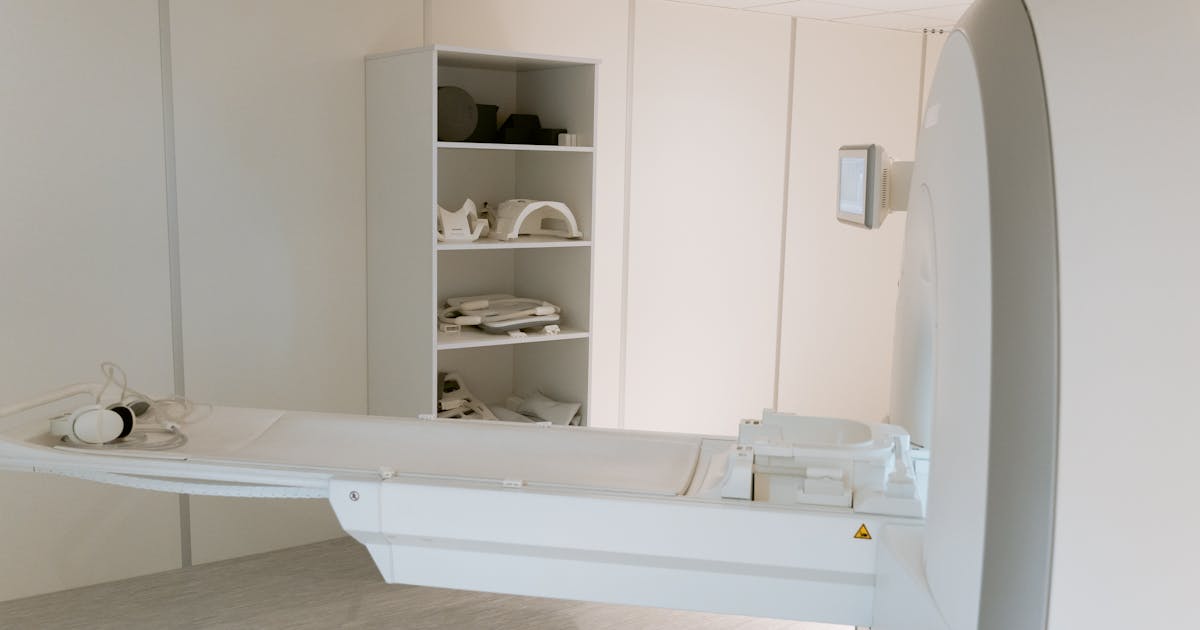
<p>The procedure itself takes about 10 minutes. You lie still on a scanner table, ECG leads are placed, and the scanner takes images while you hold your breath briefly. No IV, no contrast, no preparation. Radiation exposure is roughly equivalent to a mammogram, which is well below the threshold of concern for a one-time scan.</p>
<div class="ac-action-plan" style="background: linear-gradient(135deg, #fffcf4 0%, #fff8ed 100%); border-left: 5px solid #9A6841; border-radius: 12px; padding: 28px 24px; margin: 32px 0; box-shadow: 0 2px 12px rgba(0,0,0,0.06);"><div style="display: flex; align-items: center; gap: 10px; margin-bottom: 20px;"><svg width="24" height="24" viewBox="0 0 24 24" fill="none" stroke="#9A6841" stroke-width="2" stroke-linecap="round" stroke-linejoin="round"><path d="M9 5H7a2 2 0 00-2 2v12a2 2 0 002 2h10a2 2 0 002-2V7a2 2 0 00-2-2h-2"/><rect x="9" y="3" width="6" height="4" rx="1"/><path d="M9 14l2 2 4-4"/></svg><span style="font-family: Georgia, serif; font-size: 18px; font-weight: 700; color: #313743; letter-spacing: 1px;">READY TO TAKE ACTION? HERE'S YOUR PLAN</span></div><div style="display: flex; gap: 14px; margin-bottom: 16px; align-items: flex-start;"><div style="min-width: 36px; width: 36px; height: 36px; background: #9A6841; border-radius: 50%; display: flex; align-items: center; justify-content: center; color: #fff; font-weight: 700; font-size: 16px; flex-shrink: 0;">1</div><div><div style="font-weight: 700; color: #313743; font-size: 15px; margin-bottom: 2px;">Ask Your Doctor If You Are in the CAC Sweet Spot.</div><div style="color: #6b7280; font-size: 13.5px; line-height: 1.5;">If you are a man between 40 and 65 with intermediate cholesterol, family history of early heart attack, or uncertainty about statin therapy, ask whether a CAC scan would change the treatment plan.</div></div></div><div style="display: flex; gap: 14px; margin-bottom: 16px; align-items: flex-start;"><div style="min-width: 36px; width: 36px; height: 36px; background: #9A6841; border-radius: 50%; display: flex; align-items: center; justify-content: center; color: #fff; font-weight: 700; font-size: 16px; flex-shrink: 0;">2</div><div><div style="font-weight: 700; color: #313743; font-size: 15px; margin-bottom: 2px;">Map Your Family History Before the Visit.</div><div style="color: #6b7280; font-size: 13.5px; line-height: 1.5;">Confirm whether parents, siblings, or grandparents had heart attacks before age 55 (men) or 65 (women). Specifics shift the case for early CAC scoring.</div></div></div><div style="display: flex; gap: 14px; margin-bottom: 20px; align-items: flex-start;"><div style="min-width: 36px; width: 36px; height: 36px; background: #9A6841; border-radius: 50%; display: flex; align-items: center; justify-content: center; color: #fff; font-weight: 700; font-size: 16px; flex-shrink: 0;">3</div><div><div style="font-weight: 700; color: #313743; font-size: 15px; margin-bottom: 2px;">Plan What You Will Do With Each Possible Result.</div><div style="color: #6b7280; font-size: 13.5px; line-height: 1.5;">If a 0 score, you may hold on a statin and double down on lifestyle. If a high score, you may start treatment earlier. Decide the action path before you take the test.</div></div></div><div style="border-top: 1px solid #e5ddd4; margin: 16px 0;"></div><div style="display: flex; justify-content: center; align-items: center; gap: 10px; flex-wrap: wrap;"><button onclick="acPrintPlan()" style="background: none; border: 1px solid #d3cabe; border-radius: 8px; padding: 10px 16px; font-size: 13px; color: #6b7280; cursor: pointer; display: flex; align-items: center; gap: 6px;"><svg width="14" height="14" viewBox="0 0 24 24" fill="none" stroke="currentColor" stroke-width="2" stroke-linecap="round" stroke-linejoin="round"><polyline points="6 9 6 2 18 2 18 9"/><path d="M6 18H4a2 2 0 01-2-2v-5a2 2 0 012-2h16a2 2 0 012 2v5a2 2 0 01-2 2h-2"/><rect x="6" y="14" width="12" height="8"/></svg>Print</button></div></div>
<div style="margin-top: 32px; padding-top: 0;">
<div style="width: 60px; height: 2px; background: linear-gradient(90deg, #9A6841, #be7b4c); border-radius: 2px; margin-bottom: 20px;"></div>
<p style="font-family: Georgia, serif; font-size: 16px; font-style: italic; color: #777; margin: 0 0 6px 0; letter-spacing: 0.3px; padding-left: 38px;">To your health,</p>
<div style="display: flex; align-items: center; gap: 4px; margin-bottom: 4px;">
<img src="https://cdn.prod.website-files.com/69be130d412f9c2c202307ef/69c539b9526b266e2cba5521_ageless-coach-logo-black.png" alt="AC" style="width: 34px; height: 34px; object-fit: contain;">
<p style="font-family: Georgia, serif; font-size: 22px; font-weight: 700; color: #313743; margin: 0; letter-spacing: 0.5px;">Ageless Coach</p>
</div>
<p style="font-family: -apple-system, BlinkMacSystemFont, Segoe UI, sans-serif; font-size: 11px; font-weight: 600; color: #be7b4c; letter-spacing: 2px; text-transform: uppercase; margin: 0 0 0 28px;">Age Strong. Live Long.</p>
</div>
<div style="margin-top: 28px; padding-top: 20px; border-top: 1px solid #e5e7eb; text-align: center;">
<p style="font-family: -apple-system, BlinkMacSystemFont, Segoe UI, sans-serif; font-size: 13px; font-weight: 700; color: #6b7280; letter-spacing: 2px; text-transform: uppercase; margin: 0 0 16px 0;">Trusted Sources Behind This Article</p>
<div style="display: flex; justify-content: center; gap: 10px; flex-wrap: wrap;">
<a href="https://www.nhlbi.nih.gov/health-topics/coronary-calcium-scan" target="_blank" rel="noopener" style="display: inline-block; background: #fff; border: 1.5px solid #9A6841; color: #9A6841; padding: 8px 20px; border-radius: 20px; font-size: 14px; font-weight: 600; letter-spacing: 0.3px; text-decoration: none; transition: background 0.2s ease, color 0.2s ease;">NHLBI</a>
<a href="https://www.nhlbi.nih.gov/news/2023/coronary-artery-calcium-scores-may-improve-heart-disease-risk-predictions" target="_blank" rel="noopener" style="display: inline-block; background: #fff; border: 1.5px solid #9A6841; color: #9A6841; padding: 8px 20px; border-radius: 20px; font-size: 14px; font-weight: 600; letter-spacing: 0.3px; text-decoration: none; transition: background 0.2s ease, color 0.2s ease;">NHLBI</a>
<a href="https://www.nhlbi.nih.gov/health/heart-attack/causes" target="_blank" rel="noopener" style="display: inline-block; background: #fff; border: 1.5px solid #9A6841; color: #9A6841; padding: 8px 20px; border-radius: 20px; font-size: 14px; font-weight: 600; letter-spacing: 0.3px; text-decoration: none; transition: background 0.2s ease, color 0.2s ease;">NHLBI</a>
</div>
</div>
<p style="font-size: 12px; color: #999; margin-top: 40px; line-height: 1.5;"><em>This content is for educational purposes only and is not a substitute for professional medical advice, diagnosis, or treatment. Reading this article does not create a provider-patient relationship. Always consult your physician or qualified healthcare provider before making changes to your diet, exercise, or health routine. Ageless Coach is not liable for any actions taken based on this information.</em></p>
<div class="ac-faq" style="margin-top:40px; border-top:1px solid #e5e7eb; padding-top:32px;">
<h2 style="font-family:Georgia,serif; font-size:20px; font-weight:700; color:#313743; margin:0 0 20px 0;">Frequently Asked Questions</h2>
<details style="border:1px solid #e5e7eb; border-radius:8px; margin-bottom:10px; overflow:hidden;">
<summary style="padding:14px 18px; font-weight:600; font-size:15px; color:#313743; cursor:pointer; list-style:none; display:flex; justify-content:space-between; align-items:center;">How is a CAC scan different from a stress test?<svg width="16" height="16" viewBox="0 0 24 24" fill="none" stroke="#9A6841" stroke-width="2" stroke-linecap="round" stroke-linejoin="round" aria-hidden="true"><polyline points="6 9 12 15 18 9"/></svg></summary>
<div style="padding:0 18px 16px; font-size:18px; color:#555; line-height:1.65;">A CAC scan measures structural plaque buildup in your coronary arteries even when you have no symptoms. A stress test measures whether your heart can deliver enough oxygen during exercise, typically used when you have chest pain or shortness of breath. They answer different questions. CAC is for risk prediction; stress test is for symptom evaluation.</div>
</details>
<details style="border:1px solid #e5e7eb; border-radius:8px; margin-bottom:10px; overflow:hidden;">
<summary style="padding:14px 18px; font-weight:600; font-size:15px; color:#313743; cursor:pointer; list-style:none; display:flex; justify-content:space-between; align-items:center;">If I get a 0 score, does that mean I am safe from heart disease?<svg width="16" height="16" viewBox="0 0 24 24" fill="none" stroke="#9A6841" stroke-width="2" stroke-linecap="round" stroke-linejoin="round" aria-hidden="true"><polyline points="6 9 12 15 18 9"/></svg></summary>
<div style="padding:0 18px 16px; font-size:18px; color:#555; line-height:1.65;">A 0 score is a strong reassurance signal but not a guarantee. Soft (non-calcified) plaque is not captured by the CAC scan, and acute heart attacks can occur from plaque rupture even at low calcium scores in rare cases. Your overall risk picture (smoking, family history, blood pressure, cholesterol, diabetes) still matters. The 0 score buys time, not immunity.</div>
</details>
<details style="border:1px solid #e5e7eb; border-radius:8px; margin-bottom:10px; overflow:hidden;">
<summary style="padding:14px 18px; font-weight:600; font-size:15px; color:#313743; cursor:pointer; list-style:none; display:flex; justify-content:space-between; align-items:center;">Should I repeat the scan, and how often?<svg width="16" height="16" viewBox="0 0 24 24" fill="none" stroke="#9A6841" stroke-width="2" stroke-linecap="round" stroke-linejoin="round" aria-hidden="true"><polyline points="6 9 12 15 18 9"/></svg></summary>
<div style="padding:0 18px 16px; font-size:18px; color:#555; line-height:1.65;">If your baseline CAC is 0, repeating every 5 to 7 years is reasonable for ongoing risk monitoring. If the baseline is elevated, the score itself is the data point that drives treatment, and repeating soon does not add information because calcium accumulates slowly. Your cardiologist will set the right interval based on your starting number and risk factors.</div>
</details>
<details style="border:1px solid #e5e7eb; border-radius:8px; margin-bottom:10px; overflow:hidden;">
<summary style="padding:14px 18px; font-weight:600; font-size:15px; color:#313743; cursor:pointer; list-style:none; display:flex; justify-content:space-between; align-items:center;">Will the scan find anything that needs immediate treatment?<svg width="16" height="16" viewBox="0 0 24 24" fill="none" stroke="#9A6841" stroke-width="2" stroke-linecap="round" stroke-linejoin="round" aria-hidden="true"><polyline points="6 9 12 15 18 9"/></svg></summary>
<div style="padding:0 18px 16px; font-size:18px; color:#555; line-height:1.65;">Rarely. CAC scans are for risk stratification, not acute diagnosis. Very high scores (above 400) sometimes prompt additional imaging like coronary CT angiography or a stress test to confirm whether any of the plaque is causing significant arterial narrowing. Most results lead to medication and lifestyle decisions rather than urgent procedures.</div>
</details>
<details style="border:1px solid #e5e7eb; border-radius:8px; margin-bottom:10px; overflow:hidden;">
<summary style="padding:14px 18px; font-weight:600; font-size:15px; color:#313743; cursor:pointer; list-style:none; display:flex; justify-content:space-between; align-items:center;">Is the test useful for women too?<svg width="16" height="16" viewBox="0 0 24 24" fill="none" stroke="#9A6841" stroke-width="2" stroke-linecap="round" stroke-linejoin="round" aria-hidden="true"><polyline points="6 9 12 15 18 9"/></svg></summary>
<div style="padding:0 18px 16px; font-size:18px; color:#555; line-height:1.65;">Yes, with caveats. Women generally develop coronary calcium about 10 years later than men, so screening usually starts later (typically 55 to 65 in intermediate-risk women). Women with strong family history of premature heart disease, autoimmune disease, or pregnancy complications like preeclampsia may benefit from earlier scoring. The same CAC sweet-spot logic applies.</div>
</details>
<details style="border:1px solid #e5e7eb; border-radius:8px; margin-bottom:10px; overflow:hidden;">
<summary style="padding:14px 18px; font-weight:600; font-size:15px; color:#313743; cursor:pointer; list-style:none; display:flex; justify-content:space-between; align-items:center;">Can lifestyle changes lower my calcium score?<svg width="16" height="16" viewBox="0 0 24 24" fill="none" stroke="#9A6841" stroke-width="2" stroke-linecap="round" stroke-linejoin="round" aria-hidden="true"><polyline points="6 9 12 15 18 9"/></svg></summary>
<div style="padding:0 18px 16px; font-size:18px; color:#555; line-height:1.65;">The score itself rarely decreases because calcified plaque is structurally stable. What lifestyle and statin therapy do is slow the rate at which the score climbs, stabilize existing plaque, and reduce the chance of plaque rupture that causes heart attacks. A "stable high CAC" treated aggressively is a different prognosis than an untreated high CAC.</div>
</details>
<details style="border:1px solid #e5e7eb; border-radius:8px; margin-bottom:10px; overflow:hidden;">
<summary style="padding:14px 18px; font-weight:600; font-size:15px; color:#313743; cursor:pointer; list-style:none; display:flex; justify-content:space-between; align-items:center;">Is the radiation dose something to worry about?<svg width="16" height="16" viewBox="0 0 24 24" fill="none" stroke="#9A6841" stroke-width="2" stroke-linecap="round" stroke-linejoin="round" aria-hidden="true"><polyline points="6 9 12 15 18 9"/></svg></summary>
<div style="padding:0 18px 16px; font-size:18px; color:#555; line-height:1.65;">Modern CAC scanners use very low radiation doses, roughly equivalent to a mammogram (about 1 millisievert). That is well below the threshold of measurable individual risk. A single CAC scan in a middle-aged adult is a reasonable trade for the prognostic information it provides. Repeating annually would be a different conversation.</div>
</details>
</div>
<div class="ac-article-cta">
<p class="ac-cta-lead">Want one verified-science article like this every week?</p>
<a href="/newsletter" class="ac-nav-cta">
Get Better Health, Weekly
<span class="ac-nav-cta-arrow">
<svg viewBox="0 0 18 18" fill="none" xmlns="http://www.w3.org/2000/svg" aria-hidden="true"><path d="M4.24 13.59L12.73 5.11" stroke="#0D1B2A" stroke-width="1.8"/><path d="M4.95 4.4H13.44V12.89" stroke="#0D1B2A" stroke-width="1.8"/></svg>
</span>
</a>
</div>

Get Better Health, Weekly